
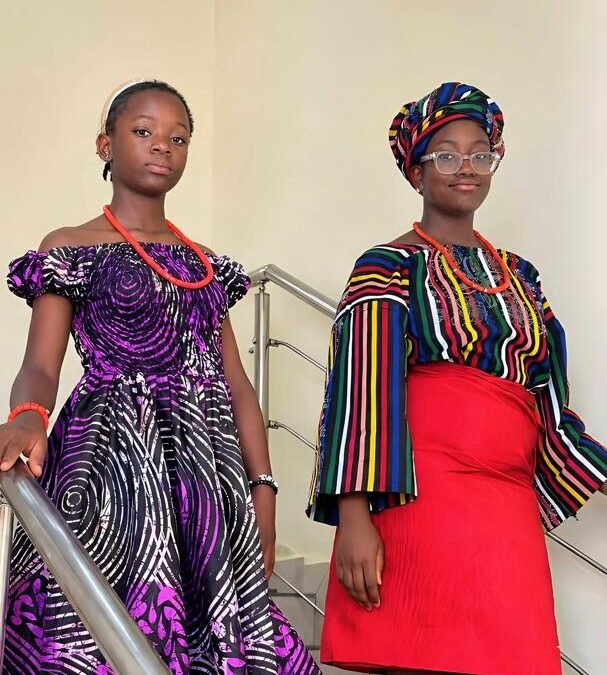
There was a time when Nigeria felt like one continuous, shared story.
A story told in different languages, with different accents, different foods, different songs, different clothes and different traditions — yet somehow, we understood one another.
We were different, but we were together.
A child could grow up in Lagos knowing that the woman selling akara at the junction might speak a different language from his mother, but she was still Mama.
Neighbours looked after one another’s children.
Families visited one another without needing an invitation.
Christmas and Eid meant travelling home, roads filled with buses and cars carrying families back to their villages. The smell of jollof rice, pounded yam, suya and pepper soup seemed to travel from one compound to another.
There was always music somewhere.
Highlife playing from an old radio.
Fuji coming from the next street.
Church choirs rehearsing on Sunday afternoons.
Muslim celebrations filling neighbourhoods with colour, music and food.
Weddings bringing together people who had never met before.
Naming ceremonies turning an entire street into a family gathering.
And football?
Football had a special way of making us forget our differences.
For ninety minutes, we were simply Nigerians.
Someone could shout from one end of the street:
“Nigeria don score!”
And suddenly, people who had never spoken to one another were celebrating together.
That was one of the beautiful things about Nigeria.
We were different.
But difference did not always mean distance.
As we celebrate Nigeria Independence Day, perhaps it is worth remembering that Nigeria’s story is not only a story of politics and historical dates.
It is a story of people.
A story of culture.
A story of resilience.
A story of unity.
And ultimately, a story that is still being written.
Nigeria Independence: What Happened on October 1, 1960?
When did Nigeria gain independence?
Nigeria gained independence on October 1, 1960, marking a historic transition from British colonial rule to self-government.
For Nigerians, October 1 became more than a date. It became a symbol of a new beginning and the responsibility of building a nation from the remarkable diversity of its people.
Nigeria independence in 1960 brought together a country made up of many ethnic communities, languages, religions, traditions and regional identities under one national flag.
Nigeria was never going to be a simple story.
We were always going to be diverse.
We were always going to be complicated.
But diversity did not mean that we could not belong to the same story.
The story of Nigeria after independence would contain moments of achievement, difficulty, celebration, conflict, resilience and renewal.
And 66 years later, Nigeria Independence Day remains an opportunity to look back at where we came from and ask where we want to go next.
Nigeria Independence History: From 1960 to Today
The history of Nigerian independence is not simply the story of October 1, 1960.
It is the story of the people, movements and political developments that shaped Nigeria’s journey towards self-government.
Independence marked the beginning of a new responsibility.
Nigeria now had to build its institutions, develop its economy, educate its citizens, strengthen its communities and create a national identity capable of bringing together people from different backgrounds.
The years that followed were not always easy.
Nigeria experienced major political changes, economic challenges, social tensions and periods that tested national unity.
Yet throughout the country’s history, Nigerians continued to demonstrate resilience.
They created businesses.
They built communities.
They educated their children.
They produced music, literature and films.
They developed new technologies.
They represented Nigeria in sports.
They travelled across the world and built successful careers.
They kept creating.
They kept adapting.
They kept moving forward.
That is an important part of Nigeria history.
Our story has never been perfect.
But it has never been empty of possibility.
Nigerian Culture and Traditions: The Beauty of Our Diversity
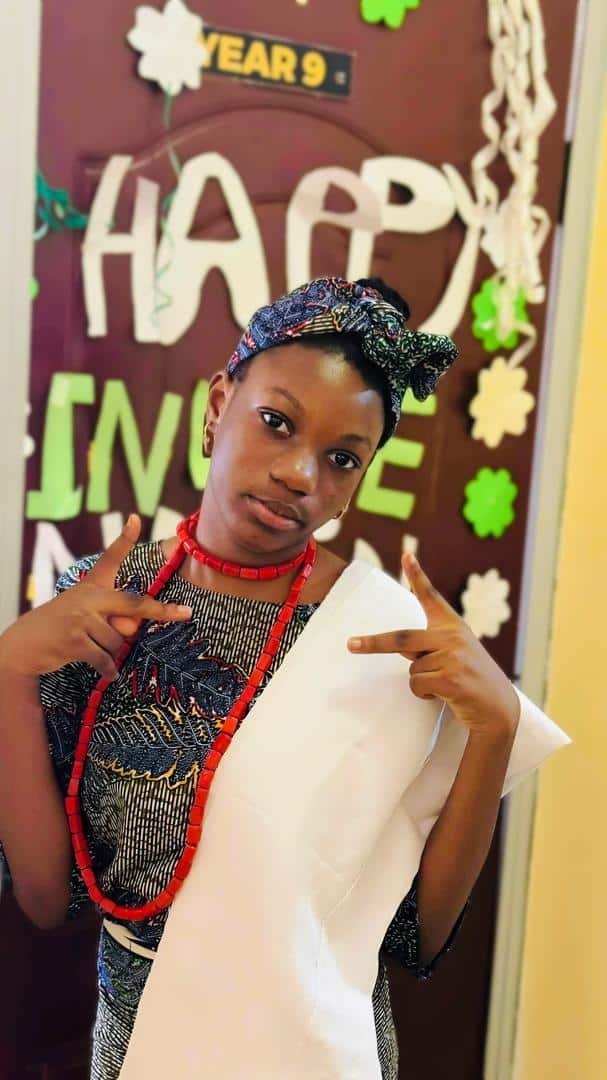
The beauty of Nigeria lives in its people, cultures and traditions.
To understand Nigeria, you have to understand its people.
Nigerian culture and traditions are among the country’s greatest treasures.
Across the country, communities have preserved unique languages, histories, cuisines, music, festivals, clothing, family traditions, arts and ways of life.
Our food tells stories.
Our clothing tells stories.
Our music tells stories.
Our festivals tell stories.
Our names tell stories.
Even the way we greet one another tells stories.
Nigeria is not one culture.
It is a meeting place of many cultures.
And perhaps that is one of the most beautiful things about being Nigerian.
We never needed to be identical to belong together.
Cultural Attire in Nigeria: Clothing That Carries Our Identity
One of the most visible expressions of Nigerian heritage is clothing.
Cultural attire in Nigeria is much more than fashion.
Traditional clothing can communicate identity, heritage, celebration, status and belonging.
From Yoruba aso oke to Igbo traditional attire, from Hausa and Fulani babban riga to the many distinctive clothing traditions found across the Middle Belt, Niger Delta and other parts of Nigeria, our clothing reflects the richness of our communities.
Traditional clothing comes alive during weddings, festivals, religious celebrations, cultural events and other important occasions.
Today, Nigerian designers continue to reinterpret traditional styles for modern audiences, showing that our heritage can evolve without disappearing.
Our cultural dressing in Nigeria reminds us that tradition does not necessarily belong in the past.
It can be carried into the future.
Cultural Traditions in Nigeria: What Brings Us Together
The cultural traditions in Nigeria are incredibly diverse.
Naming ceremonies.
Weddings.
Festivals.
Traditional dances.
Storytelling.
Music.
Food.
Family gatherings.
Respect for elders.
Community celebrations.
These traditions may differ from one community to another, but many of them share one powerful quality:
they bring people together.
A wedding is rarely only about the couple.
A naming ceremony is rarely only about the child.
A festival is rarely only about the people organising it.
In many Nigerian communities, important moments become community moments.
And that sense of togetherness is something worth protecting.
The Taste of Nigeria
There may be few things more capable of bringing Nigerians together than food.
Jollof rice.
Pounded yam.
Egusi soup.
Amala.
Suya.
Akara.
Moi moi.
Pepper soup.
Ofada rice.
Tuwo.
Roasted corn.
Nigerian food reflects our diversity, but it also shows how easily cultures can cross boundaries.
A person can grow up eating one traditional meal and develop a love for another community’s cuisine.
Food travels.
Recipes travel.
People travel.
And in the process, cultures meet.
Sometimes, unity begins around a table.
The Sound of a Nation
Then there is Nigerian music.
From traditional rhythms and Highlife to Fuji, Juju, Afrobeat and today’s Afrobeats, Nigerian music has continued to evolve while carrying our stories with it.
Music is more than entertainment.
It is memory.
It is identity.
It is celebration.
It is storytelling.
Today, Nigerian music is listened to by audiences around the world.
Our artists have shown that Nigerian stories do not have to remain within Nigerian borders.
They can travel.
They can connect.
They can influence.
And when the world listens to Nigerian music, it also encounters a part of Nigerian culture.
The Nigeria We Remember
Perhaps the easiest way to understand the beauty of Nigeria is not through statistics.
It is through memories.
The sound of Highlife coming from an old radio.
The rhythm of Fuji somewhere down the street.
Church choirs rehearsing on Sunday afternoons.
Eid celebrations filling neighbourhoods with colour.
Christmas journeys back home.
Weddings where strangers became friends.
Naming ceremonies where the entire street seemed invited.
Children playing football until somebody shouted that it was getting dark.
The auntie who was not your biological auntie but was still Aunty.
The neighbour who could walk into your house without needing a formal appointment.
The plate of food sent across the compound.
These memories matter.
Because they remind us that unity is not simply a political concept.
Unity can be a shared meal.
A friendship.
A football match.
A wedding.
A classroom.
A song.
A neighbour helping another neighbour.
A family welcoming someone from another part of the country.
Sometimes, unity is simply choosing to see another Nigerian as a fellow human being before seeing their tribe, religion, language or region.
What If We Had Invested More in Unity?
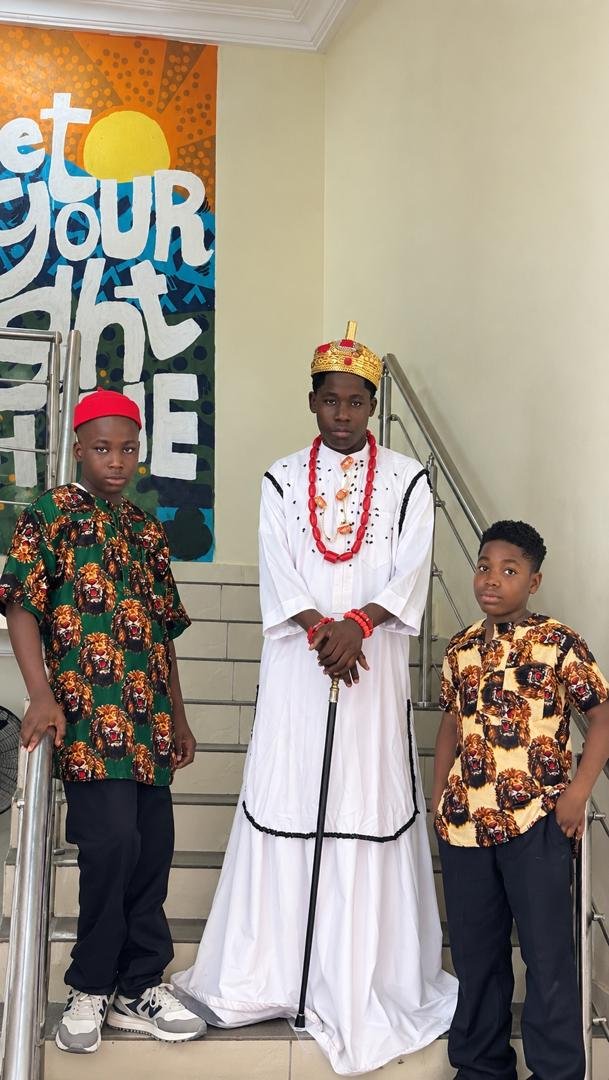
Traditional Nigerian attire: culture, identity and heritage woven into every detail.
This may be one of the most important questions we can ask about Nigeria’s journey.
What if, alongside investing in roads, industries, schools and natural resources, we had invested even more deliberately in trust between Nigerians?
What if children in Lagos grew up learning about the cultures of Kaduna, Enugu, Kano, Jos, Ibadan, Benin and Calabar as parts of their own national story?
What if schools taught children that understanding another Nigerian’s culture was not simply cultural education, but nation-building?
What if our greatest competition was not between tribes or regions, but between ideas?
What if we spent more time asking:
“What can we build together?”
instead of:
“What belongs to us?”
Perhaps Nigeria would look different today.
Perhaps more of our collective talent would have been unleashed.
Perhaps some of the things that divide us would have become less powerful.
But reflecting on what could have been should not prevent us from thinking about what can still be.
Because Nigeria’s story is not finished.
What Has Nigeria Achieved Since Independence?
There is much to celebrate when we look at Nigeria since independence.
Nigeria has produced writers whose works are read around the world.
Musicians whose songs have crossed continents.
Filmmakers who have built a globally recognised Nigerian film industry.
Athletes who have represented the country on the world’s biggest sporting stages.
Entrepreneurs who have created businesses and solutions for millions of people.
Technology professionals who are building products for African and international markets.
Scientists, doctors, engineers, architects, teachers, artists and professionals who continue to contribute both within Nigeria and around the world.
Our culture has become one of our strongest global ambassadors.
Nigerian music has travelled.
Nigerian films have travelled.
Nigerian fashion has travelled.
Nigerian food has travelled.
Nigerian talent has travelled.
And everywhere Nigerians go, they carry a piece of home with them.
That is also part of Nigeria history.
The Challenges Nigeria Still Faces
Loving Nigeria does not mean pretending everything is perfect.
Our story contains difficult chapters.
Economic challenges.
Infrastructure gaps.
Social inequality.
Security concerns.
Political disagreements.
Ethnic and religious tensions.
Limited opportunities for many young people.
These challenges deserve honest attention.
But acknowledging our challenges does not mean giving up on the country.
It gives us a reason to participate in building it.
The question is not only:
“What is wrong with Nigeria?”
The more important question is:
“What can we do to make Nigeria better?”
And that brings us to one of the most powerful tools available to any nation:
education.
Education in Nigeria: Building the Future of Nigerian Youth
The importance of education in Nigeria goes far beyond passing examinations.
Education shapes how young people think about themselves, their communities and the world.
It teaches them how to question.
How to create.
How to solve problems.
How to communicate.
How to collaborate.
How to use technology.
How to lead.
How to innovate.
And how to understand people who may not look, speak or worship like them.
This is why education and national development in Nigeria are so closely connected.
If we want innovative young Nigerians, we need education that encourages creativity.
If we want problem-solvers, we need education that develops critical thinking.
If we want stronger communities, we need education that encourages empathy and collaboration.
If we want a more united Nigeria, our classrooms must become places where young Nigerians learn not only about their own backgrounds, but about one another.
Education is therefore not simply about preparing a child for a career.
It is about preparing a citizen for a country.
Nigerian Youth: The Generation That Will Shape Nigeria’s Future
Nigeria’s future will be shaped by today’s Nigerian youth.
Some will become doctors.
Some engineers.
Some teachers.
Some scientists.
Some entrepreneurs.
Some artists.
Some technology leaders.
Some farmers.
Some researchers.
Some policymakers.
Some will build businesses.
Some will create music.
Some will develop technology.
Some will solve problems we do not yet know exist.
And some will study in Nigerian universities, while others will study in universities around the world.
The possibilities are enormous.
But talent needs preparation.
Dreams need skills.
Ideas need knowledge.
And that is where education becomes one of the most important investments Nigeria can make in its future.
Preparing Nigerian Students for a Global World
The Nigerian student of today is growing up in a world that is more connected than ever before.
A student in Lagos can collaborate with someone in London.
A student in Abuja can learn from a university professor in Canada.
A young Nigerian can study in the United States, conduct research in Europe or build a career anywhere in the world.
The world is changing.
And Nigerian students must be prepared to participate confidently in it.
At GISS/GIC, we believe that preparing students for a global world should never mean disconnecting them from Nigeria.
Our goal is to give students the academic foundation and skills they need to pursue opportunities both within Nigeria and internationally.
Through pathways including IGCSE, A-Level, SAT and Advanced Placement (AP), students can prepare for university opportunities in Nigeria and around the world.
But education is more than qualifications.
We want students to develop:
- Critical thinking
- Problem-solving
- Communication
- Creativity
- Leadership
- Digital skills
- Collaboration
- Confidence
- Integrity
- Cultural awareness
Because the world does not only need students with certificates.
It needs young people who can use knowledge to create solutions.
Nigerian Students Studying Abroad: Taking Nigeria to the World
For many Nigerian families, studying abroad is an important educational goal.
Some students dream of Canada.
Some dream of the United Kingdom.
Some dream of the United States.
Others choose leading universities in Nigeria.
There is no single path to success.
What matters is that students are properly prepared to make the most of whichever path they choose.
But there is something we believe should never be forgotten:
A Nigerian student can go anywhere in the world without losing where they came from.
A student can study in Toronto and still remember Lagos.
A student can study in London and still understand Nigerian culture.
A student can build a career in New York and still care about Nigeria’s future.
A student can attend a Nigerian university and still develop the global skills required to compete internationally.
At GISS/GIC, we believe international education and Nigerian identity can exist together.
We want our students to go into the world with confidence — but also with roots.
We want them to learn from the world.
To build global networks.
To gain knowledge and experience.
And, where possible, to bring that knowledge and experience back home.
Because studying abroad from Nigeria should not simply be about leaving Nigeria.
It can also be about learning, growing and eventually contributing to the country that helped shape you.
Why Schools Must Help Students Remember Nigeria
If we want future generations to appreciate Nigerian culture, history and traditions, we cannot simply assume they will learn everything naturally.
Schools have a responsibility.
We must teach children about Nigeria.
We must help them understand our history.
We must celebrate our culture.
We must expose them to different Nigerian traditions.
We must encourage friendships across cultural backgrounds.
And we must teach students that another Nigerian’s culture is not something to fear.
It is something to understand.
At GISS/GIC, this is an important part of how we view education.
We are proud to help students prepare for opportunities in Nigeria and abroad, but we also want them to remain connected to the country they call home.
We want a student who studies abroad to remember Nigeria.
We want a student who attends a Nigerian university to understand the wider world.
We want a future doctor, engineer, entrepreneur, scientist, artist or technology leader to understand not only how to succeed, but how their success can contribute to society.
Because educating a Nigerian child is not only about preparing an individual.
It is an investment in Nigeria.
The Nigeria We Could Still Become
Perhaps the most beautiful thing about looking back is that the story does not have to end in the past.
We can remember what was beautiful without pretending everything was perfect.
We can acknowledge what went wrong without believing everything is lost.
And we can imagine again.
Imagine a Nigeria where our diversity is an advantage.
Where a child from Plateau can dream alongside a child from Lagos.
Where a young entrepreneur from Kano can build with a software developer from Enugu.
Where music from Lagos is celebrated in Kaduna.
Where fashion from Aba is admired in Abuja.
Where students from different ethnic backgrounds learn together, play together and dream together.
Where a Nigerian student can study abroad and still feel deeply connected to home.
Where our schools produce young Nigerians who understand not only how to compete with the world, but how to build with one another.
Where being Nigerian is not something we celebrate only on October 1.
It is something we experience every day.
Nigeria’s Future Begins in the Classroom
Every generation inherits something.
But every generation also has an opportunity to change something.
Somewhere in Nigeria today, a child is sitting in a classroom who will become an engineer.
Another will become a doctor.
Another will become an entrepreneur.
Another will become a scientist.
Another will become a teacher.
Another will become a filmmaker.
Another will become a software developer.
Another will become an artist.
Another may study at a Nigerian university.
Another may become one of the Nigerian students studying abroad, gaining international experience and knowledge.
And another may one day bring that knowledge home.
We do not yet know their names.
We do not yet know the problems they will solve.
We do not yet know the companies they will build or the discoveries they will make.
But we know this:
Nigeria’s future will be shaped by them.
That is why education matters.
That is why culture matters.
That is why unity matters.
And that is why remembering where we came from matters.
A Nigeria Worth Building
Perhaps the ultimate goal is not simply to produce young Nigerians who can succeed anywhere.
It is to help create a Nigeria that gives those young Nigerians reasons to come home.
A Nigeria where innovation has room to grow.
Where businesses can flourish.
Where creativity is celebrated.
Where education produces problem-solvers.
Where communities trust one another.
Where talent is not limited by where someone was born.
Where a young Nigerian can look at the country and see not only its problems, but its possibilities.
A Nigeria worth investing in.
A Nigeria worth believing in.
A Nigeria worth building.
A Nigeria worth coming home to.
Frequently Asked Questions About Nigeria Independence Day
When did Nigeria gain independence?
Nigeria gained independence on October 1, 1960. The date is commemorated every year as Nigeria Independence Day.
What happened on October 1, 1960?
October 1, 1960 marked Nigeria’s independence and the beginning of a new chapter in the country’s political history.
What is the history of Nigerian independence?
The history of Nigerian independence is the story of Nigeria’s transition from British colonial rule towards self-government, culminating in independence on October 1, 1960.
Why is October 1 important to Nigeria?
October 1 is important because it marks Nigeria’s independence and provides an opportunity for Nigerians to reflect on the country’s history, culture, achievements, challenges and future.
What makes Nigerian culture unique?
Nigerian culture is shaped by numerous ethnic communities, languages, traditions and histories. Its diversity can be seen in food, clothing, music, festivals, literature, art and family traditions.
Why is unity important in Nigeria?
Unity allows Nigerians from different ethnic, cultural, linguistic and religious backgrounds to work together toward shared national goals while maintaining their individual identities.
What is the importance of education in Nigeria?
Education helps develop the knowledge, critical thinking, creativity, technical skills and leadership abilities that Nigerian young people need to contribute to national development.
Can Nigerian students study abroad without forgetting Nigeria?
Yes. Studying abroad can provide international exposure and knowledge while students remain connected to their Nigerian culture, identity, communities and responsibilities.
Conclusion: The Nigeria We Remember, The Nigeria We Are Building
Every Nigeria Independence Day gives us an opportunity to look backwards.
To remember.
To celebrate.
To reflect.
And to imagine.
We should remember the Nigeria of shared meals, neighbourhood friendships, music, football, weddings, festivals and communities.
We should celebrate the Nigerian culture and traditions that make our country unique.
We should acknowledge the challenges that remain.
And we should imagine what becomes possible when Nigerians choose to build together.
Because Nigeria has always been many things at once.
Many languages.
Many cultures.
Many traditions.
Many stories.
Many peoples.
But one country.
One home.
And perhaps the Nigeria we remember is not simply a memory of a better time.
Perhaps it is a reminder.
A reminder that we have always had the capacity to live together, celebrate together, create together and dream together.
The Nigeria we want may not be exactly the Nigeria we inherited.
But it can be the Nigeria we build.
One classroom at a time.
One child at a time.
One friendship at a time.
One community at a time.
One idea at a time.
One generation at a time.
So, this Nigeria Independence Day, perhaps we should not only ask:
“How far have we come?”
Perhaps we should ask:
“What could Nigeria become if we truly learned to build together?”
The answer will not be written by one person.
It will not be written by one region.
It will not be written by one generation alone.
It will be written by all of us.
And it begins with the children we are educating today.
The children who will carry our culture.
The children who will carry our values.
The children who will carry our ideas.
The children who will carry Nigeria into the world.
And hopefully, one day, bring the very best of the world back home.
Because the Nigeria we remember does not have to remain only a memory.
The Nigeria we imagine does not have to remain only a dream.
The Nigeria we want can be the Nigeria we build.
One classroom at a time.
One child at a time.
One generation at a time.
Happy Independence Day, Nigeria. 🇳🇬
Here is to the Nigeria we remember.
Here is to the Nigeria we love.
And here is to the Nigeria we are still building together.

Recent Comments